
- About Us
- Technology
- For Business
- Restaurant/Fast-food
- Coffee Shop
- Retail
- Pub/Bar/Club
- Hotel
- Office/education
- Transport
- Stadium/Event
- Automotive
- Case studies
- The App
- Products
Receive the latest products and events news from Aircharge directly in your inboxNewsletter sign up
Nissan Introduces Qi2 Wireless Charging in Cars — What It Means for the Future of In-Car Charging
Feb 3, 2026
TL;DR:
Nissan has become the first car manufacturers to introduce Qi2 wireless charging in its vehicles — a major signal that magnetically aligned wireless charging is moving into long-term automotive infrastructure. Qi2 improves charging efficiency, alignment, and speed (up to 25W on supported devices), making it more reliable for in-car use. This supports the broader shift toward magnetic charging ecosystems. Aircharge’s AirMag range aligns with this trend, offering magnetic alignment charging and now Qi2-enabled models, positioning it well for the future of cross-environment wireless charging.
Qi2 Wireless Charging Enters the Automotive Mainstream
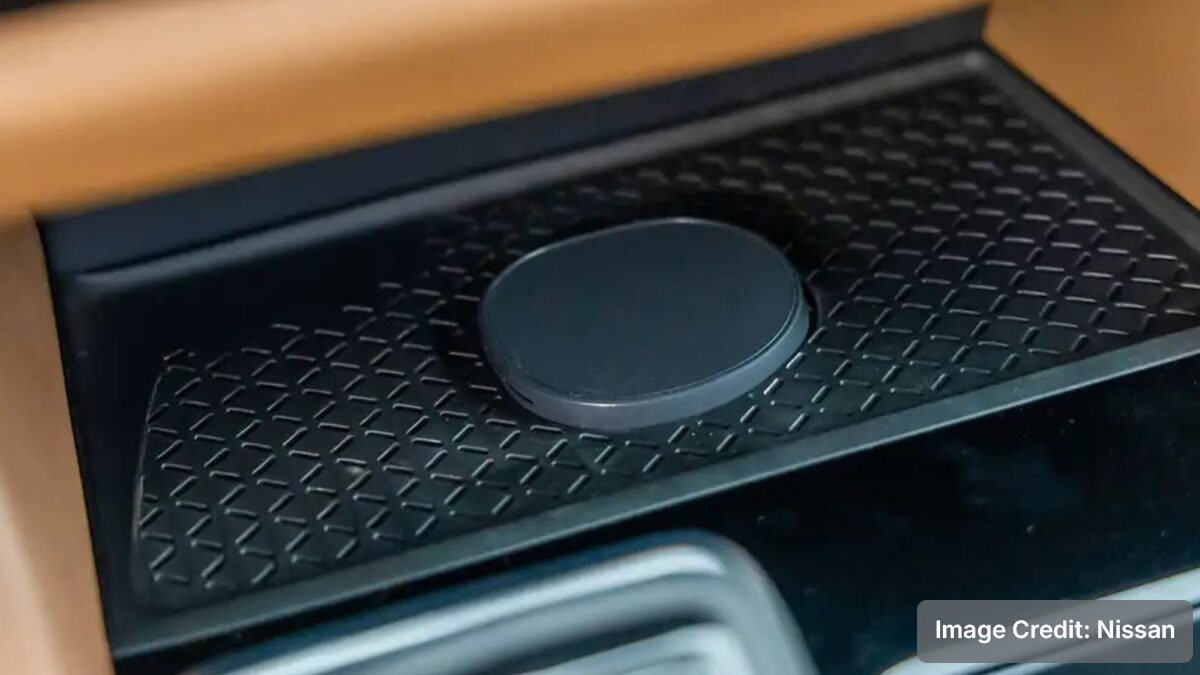
Wireless charging inside vehicles is entering a new phase. Nissan has announced that its latest vehicles will be the first to introduce Qi2 wireless charging technology — marking an important step forward for both automotive and mobile charging ecosystems.
This is more than a feature update. It signals that Qi2 magnetic alignment charging is becoming a long-term standard, supported by major manufacturers and designed for the next generation of devices and accessories.
For the wider industry — including Aircharge — this represents a meaningful milestone in how wireless charging infrastructure is evolving.What Is Qi2 Wireless Charging?
Qi2 is the latest standard from the Wireless Power Consortium (WPC). It builds on the established Qi wireless charging protocol and adds magnetic alignment technology, the same as the magnetic charging systems used in newer smartphones.
A Qi2 charger provides:- Magnetic alignment between device and charger
- More consistent coil positioning
- Improved charging reliability
- Reduced energy loss and heat
- Support for higher charging speeds (up to 25W on supported devices)
- Greater interoperability across brands and product categories
The key improvement is alignment. Traditional wireless charging can suffer from poor placement, which can lead to slower charging or interruptions. Qi2 addresses this through magnetic positioning that keeps devices correctly aligned during charging.
Why Nissan’s Qi2 Wireless Charging Announcement Matters
Automotive product lifecycles are long — typically 10–15 years from platform development to end-of-life. When a car manufacturer adopts a new charging technology, it is making a long-term ecosystem decision.
Nissan’s integration of a Qi2 wireless charger into its vehicles signals several important trends:1. Qi2 is moving beyond accessories into built-in infrastructure
Wireless charging is becoming a core vehicle feature rather than an optional add-on.
2. Magnetic wireless charging is becoming a mainstream expectation
Automotive adoption helps accelerate user familiarity and cross-industry standardisation.
3. OEMs are planning for next-generation devices
Vehicle platforms must support both current and future smartphones, making Qi2 a future-ready choice.
4. Magnetic alignment improves in-car usability
Vehicle movement and vibration can affect device placement. Magnetic alignment helps maintain stable charging during travel.The Supporting Narrative for Magnetic Charging Ecosystems
Industry adoption reinforces a broader shift towards magnetically aligned wireless charging across environments — at home, at work, in public spaces, and now in vehicles.
As Qi2 expands across manufacturers and infrastructure providers, interoperability improves and users benefit from a more consistent charging experience across locations and products.How Aircharge’s AirMag Range Aligns with Qi2 Adoption

Aircharge has been investing in magnetic alignment charging through its AirMag range, developed to deliver more reliable wireless charging across commercial and consumer environments.
The AirMag platform was built around the same principles now formalised in Qi2:- Magnetic alignment for accurate positioning
- Stable charging performance
- Reduced wasted energy
- Consistent user experience
Aircharge has since introduced Qi2 technology into the AirMag range, enabling compatibility with the newest Qi2-enabled devices and delivering up to 25W charging where supported.
AirMag Qi2 chargers provide:- Certified Qi2 magnetic charging
- Fast charging with compatible devices
- Backwards compatibility with existing Qi devices
- Future-ready deployment across multiple environments
What Comes Next for Qi2 Chargers in Automotive and Beyond
Nissan’s Qi2 charger rollout is likely the start of wider automotive adoption. As manufacturers continue to improve in-car charging performance, magnetic alignment solutions are expected to become more common.
We are likely to see:- Broader Qi2 charger integration across vehicle models
- Expanded device compatibility
- Faster charging support
- Greater cross-industry standardisation
- Growth of Qi2 infrastructure across sectors
The Bigger Picture
The move towards Qi2 wireless charging in cars reflects a wider industry shift towards magnetically aligned wireless power delivery.
With long automotive product lifecycles and increasing device power demands, Qi2 provides a scalable foundation for the next generation of charging infrastructure. Aircharge’s AirMag Qi2 range is designed to operate within this evolving ecosystem — supporting reliable, magnetically aligned wireless charging wherever users expect it.Stay Connected
- News - Two firsts, one table: iPhone Duo meets the AirMag Fold
- Events - Powering London Tech Week 2026 as Official Charging Partner
- Restaurant/Fast-food Case Study - Transforming the Cinema Experience at Reel Cinemas, Dubai
- News - Nissan Introduces Qi2 Wireless Charging in Cars — What It Means for the Future of In-Car Charging
- Transport Case Study - Workday x British Airways Lounges — Powering Connections and Brand Awareness
- Events - Aircharge at Design London Shoreditch – Find Us at DW29
- News - Driving Wireless Charging Forward with Apple MagSafe
- Events - Empowering London Tech Week 2025 with Seamless Wireless Charging and Smart Digital Services
- News - The Future of Phone Charging: A World Without Wires
- Restaurant/Fast-food Case Study - Transforming Customer Engagement at PF Chang's UAE
- For Business


